Source Used Diesel Coach Bus for School, Transit, and Touring
Compare 19 Used Diesel Coach Bus listings with varying seat capacities, power ratings, and emission standards. Buyers can evaluate manual transmission models from China for school, transit, and touring applications.
Key considerations
Products List


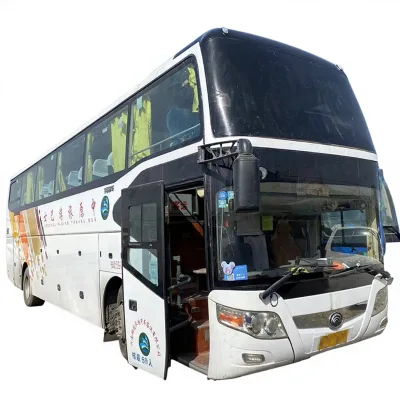
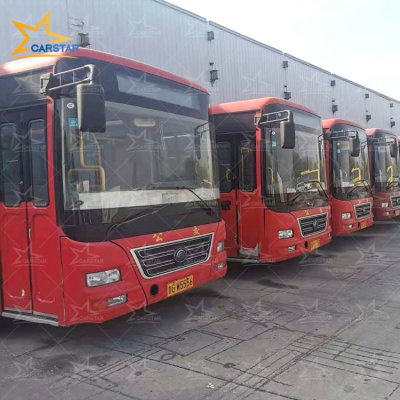
Used Refurbished Bus City Transportation Diesel Engine 51 Seat Coach Bus
$8000.00 - $8600.00
MOQ: 1 Pieces


Used Coach Bus Used Bus Price Used Buses for Sale Used Coach Bus for Sale
$15000.00 - $16500.00
MOQ: 1 Sets

Used Coach Bus Used Bus Price Used Coach Sales 34-37 Seats Front Engine Bus
$15000.00 - $16500.00
MOQ: 1 Sets

$23528.00 - $35000.00
MOQ: 1 Pieces


Comprehensive Sourcing Guide
Strategic Sourcing Guide for Used Diesel Coach Buses
Understanding the Market Landscape and Core Specifications
The global market for second-hand used diesel coach buses presents a distinct value proposition for operators seeking to expand fleets without the capital expenditure associated with new vehicles. Based on current market observations, the core product category is defined by "Second Hand Used Bus" units that are predominantly diesel-powered, aligning with the high-torque requirements of long-haul transport. The observed price range for these assets sits between 8,000 and 60,000 USD, a variance driven primarily by age, condition, and specific configuration.
When evaluating the technical specifications of these units, buyers must recognize that the fleet is not monolithic. The data indicates a mix of engine capacities, with some units exceeding 8 liters, which typically correlates with the Euro emission standards observed in the market. Power outputs vary significantly across the inventory, with recorded maximum power ratings ranging from 153 kW to 243 kW. Similarly, torque specifications are critical for heavy-load applications, with observed values spanning from 345 N·m to 1,250 N·m. This wide spectrum suggests that procurement strategies must be tailored to specific route requirements; a 153 kW unit may suffice for urban transit, whereas a 243 kW unit is necessary for mountainous or fully loaded intercity routes.
The physical dimensions and structural integrity of the buses also vary. Observed standard dimensions include lengths around 10,800 mm to 12,800 mm, with widths generally standardized near 2,550 mm to 2,600 mm and heights ranging from 3,330 mm to 4,000 mm depending on the packing and chassis configuration. The seating capacity is another critical variable, with listings indicating a range from 35 seats up to 70 seats. Some units are configured as single-deck structures, while others are explicitly identified as low-floor buses, a feature that significantly impacts accessibility and boarding efficiency. The steering configurations are equally diverse, with both Left-Hand Drive (LHD) and Right-Hand Drive (RHD) options available, necessitating that buyers verify the steering position against their local traffic regulations before purchase.
Technical Verification and Performance Metrics
A rigorous technical verification process is essential when sourcing used diesel coaches, as the "Used" condition attribute implies a history of wear that must be quantified. The first step in this verification is the assessment of the engine and transmission systems. Most units in the observed market utilize manual transmission types, which are often preferred in heavy-duty coach applications for their durability and ease of maintenance in remote locations. However, the complexity of the engine management systems varies. Buyers should verify the actual engine capacity against the listed specifications, particularly for units claiming Euro emission standards. While some listings explicitly mention Euro standards, the specific tier (e.g., Euro 3, Euro 4) is often not detailed in general summaries, requiring direct inspection of the engine serial number and emission control hardware.
Performance metrics such as maximum speed and acceleration are vital for route planning. Observed maximum speeds for these units range from 91 km/h to 110 km/h. This range is sufficient for highway travel but requires validation to ensure the vehicle can maintain legal speeds under full load conditions. The intelligence and automation features also vary; some units are equipped with BRT (Bus Rapid Transit) systems, indicating advanced scheduling and fleet management capabilities, while others may rely on more traditional mechanical systems.
The structural integrity of the bus body is paramount. The data shows a mix of "Large" and "Medium" size classifications, which often correlate with the seating layout. For instance, a "Large" size configuration might support 65 to 70 seats, whereas a "Medium" configuration might be optimized for 31 to 45 seats. Buyers must inspect the chassis for signs of fatigue, particularly in the frame rails and suspension mounting points. The packing dimensions provided in the listings (e.g., 12,800 x 3,000 x 4,000 mm) are crucial for logistics planning, as they indicate the space required for transport and storage. These dimensions often differ from the operational standard dimensions (e.g., 12,570 x 2,450 x 3,350 mm), highlighting the need to account for protective packaging or shipping configurations during the procurement timeline.
Compliance, Certification, and Regulatory Standards
Navigating the regulatory landscape is a critical component of sourcing used diesel buses, especially given the varying emission standards and certification requirements across different regions. The market data indicates that many units come with ISO and CCC (China Compulsory Certification) certificates. However, the presence of a certificate on a listing does not automatically guarantee compliance with the destination country's specific regulations. Buyers must verify that the "Euro" emission standard listed on the vehicle matches the legal requirements of the operating region. For example, importing a vehicle with a lower emission standard into a region with strict environmental laws could result in fines or operational bans.
The certification status should be treated as an observation rather than a guarantee of current validity. The "ISOCondition:Used" and "ISOCCC" labels suggest that the manufacturer or supplier has undergone certain quality or safety assessments, but these may be historical records. Buyers are advised to request current, valid copies of these certificates and cross-reference them with the vehicle identification number (VIN). Additionally, the "prod_standard" dimensions listed (e.g., 11,000 x 2,550 x 3,670 mm) must be compared against local vehicle width and height restrictions. In many jurisdictions, exceeding specific dimensions can lead to permit requirements or route limitations.
Furthermore, the "prod_origin" is listed as China for a significant portion of the inventory. This origin point influences the availability of spare parts and the ease of obtaining technical support. Buyers should investigate whether the Chinese standards (CCC) are recognized in their target market or if additional local homologation is required. The "Integral Power Steering" feature is a standard safety component, but its integration with the braking system and suspension must be verified to ensure it meets local safety codes.
Cost Drivers and Financial Considerations
The financial landscape of sourcing used diesel coaches is influenced by several dynamic factors beyond the base purchase price. The observed price range of 8,000 to 60,000 USD reflects the condition, age, and specifications of the units. A primary cost driver is the engine capacity and power output. Units with higher power ratings (e.g., 243 kW) and larger torque (1,250 N·m) typically command a premium due to their ability to handle heavier loads and more demanding routes. Conversely, lower power units (153 kW) may be more affordable but could incur higher fuel costs or reduced efficiency over time if underpowered for the intended application.
Maintenance history is another significant cost driver. A "Used" bus with a documented service history and recent major component replacements (such as the transmission or engine overhaul) will likely have a higher upfront cost but lower immediate maintenance expenses. Buyers should factor in the potential cost of retrofitting emission control systems if the vehicle's current standard does not meet local regulations. Additionally, the "Seat Capacity" directly impacts the revenue potential; a bus with 70 seats can generate more fare revenue than one with 35 seats, justifying a higher acquisition cost if the route demand supports it.
Logistics and shipping costs are also critical. The packing dimensions (e.g., 12,800 x 3,000 x 4,000 mm) determine the shipping method and associated freight charges. Larger, heavier units may require specialized transport, increasing the total landed cost. Buyers should also consider the lead time and availability of spare parts, which can vary based on the model (e.g., XMQ6113, ZK6110, zk6122). Older models or less common configurations might have longer lead times for parts, affecting the total cost of ownership.
Typical Applications and Operational Use Cases
The versatility of used diesel coach buses makes them suitable for a wide range of applications, from intercity travel to specialized transport services. The "Usage" attribute in the market data lists "Bus, Coach, School Bus," indicating that these vehicles are designed for multi-purpose use. For intercity coach services, the high-torque engines and large seating capacities (up to 70 seats) are ideal for long-distance travel, providing comfort and efficiency for passengers. The "Sitting" style configuration is standard for these applications, ensuring passenger comfort over extended periods.
School bus applications require specific safety features and seating arrangements. The "Low Floor Bus" structure observed in some listings is particularly advantageous for school transport, as it facilitates easier boarding for children and passengers with mobility challenges. The "Integral Power Steering" and robust braking systems are essential for the frequent stopping and starting associated with school routes. However, buyers must ensure that the vehicle meets local school bus safety standards, which may include specific lighting, signage, and emergency exit requirements not always evident in the general product description.
Public transit and BRT (Bus Rapid Transit) systems also utilize these vehicles, particularly those with advanced intelligence features. The "BRT" classification suggests that some units are equipped with systems that integrate with traffic management networks, allowing for priority signaling and efficient scheduling. This makes them suitable for high-frequency urban routes where reliability and punctuality are paramount. The "Single-Deck" structure is generally preferred for urban environments due to its lower center of gravity and maneuverability, although double-deck options may exist in other market segments.
Supplier Evaluation and Quality Assurance Protocols
Evaluating suppliers in the used bus market requires a disciplined approach to ensure reliability and product quality. Since the market is global, with origins primarily in China, buyers must verify the supplier's reputation and track record. While specific supplier names should not be recommended, buyers should look for suppliers who provide transparent documentation, including detailed inspection reports, service records, and clear photos of the vehicle's condition. The presence of certifications like ISO and CCC is a positive indicator, but buyers should verify the authenticity and current status of these documents.
Quality assurance protocols should be established before the final purchase. This includes a comprehensive pre-purchase inspection (PPI) conducted by a qualified third-party mechanic or engineer. The PPI should cover the engine, transmission, chassis, electrical systems, and body structure. Special attention should be paid to the "Condition: Used" attribute, ensuring that any wear and tear is accurately assessed and that the vehicle is not approaching the end of its useful life. Buyers should also verify the "Seat Capacity" and "Steering Position" to ensure they match the operational requirements.
Communication with the supplier is crucial for clarifying any ambiguities in the product listing. Buyers should request detailed specifications for the specific unit they are interested in, including the exact model number (e.g., XMQ6113, 6792, ZK6110) and the current status of the emission standard. The supplier should be able to provide a clear explanation of any discrepancies between the listed specifications and the actual vehicle. Additionally, buyers should inquire about the warranty terms and after-sales support, as these can significantly impact the long-term viability of the purchase.
Long-Term Procurement and Lifecycle Management
Procuring a Used Diesel Coach Bus is not just a transaction but the beginning of a long-term lifecycle management strategy. Buyers must consider the total cost of ownership (TCO), which includes fuel consumption, maintenance, repairs, and eventual disposal costs. The "Diesel" fuel type, while common, is subject to fluctuating prices and increasing regulatory pressure in many regions. Buyers should evaluate the fuel efficiency of the specific model and consider the potential impact of future emission regulations on the vehicle's operational lifespan.
Maintenance planning is essential for maximizing the value of the asset. Buyers should establish a regular maintenance schedule based on the manufacturer's recommendations and the vehicle's usage patterns. The availability of spare parts is a critical factor; models with a large installed base, such as the XMQ6113 or ZK6110, generally have better parts availability than niche models. Buyers should also consider the resale value of the vehicle, as a well-maintained bus with a clear service history will retain more value over time.
Finally, buyers should plan for the eventual replacement of the vehicle. The "Used" condition implies a finite remaining lifespan, and buyers should have a strategy for when to retire the vehicle. This strategy should include monitoring the vehicle's performance metrics, such as fuel efficiency and maintenance costs, to determine the optimal time for replacement. By adopting a proactive approach to lifecycle management, buyers can ensure that their fleet remains efficient, compliant, and cost-effective over the long term.
FAQs
What is the typical price range for used diesel coach buses?
The observed price range for these assets sits between 8,000 and 60,000 USD. This variance is driven primarily by age, condition, and specific configuration such as engine capacity and seating layout.
Which emission standards are commonly found in this inventory?
Many units in the observed market align with Euro emission standards, often associated with engine capacities exceeding 8 liters. Buyers must verify that the listed standard matches the legal requirements of their operating region.
How many seats can a Used Diesel Coach Bus typically hold?
Seating capacity ranges from 35 seats up to 70 seats depending on the model and configuration. Some units are optimized for 31 to 45 seats, while larger configurations support up to 70 passengers.
What certifications are usually provided with these used buses?
Many units come with ISO and CCC (China Compulsory Certification) certificates. However, the presence of a certificate on a listing does not automatically guarantee compliance with the destination country's specific regulations.
Can I find used diesel coach buses with low floor structures?
Yes, some units are explicitly identified as low-floor buses, which facilitates easier boarding. This feature is particularly advantageous for school transport and accessibility requirements in urban environments.
What is the maximum power output for these diesel engines?
Power outputs vary significantly across the inventory, with recorded maximum power ratings ranging from 153 kW to 243 kW. Higher power ratings are typically necessary for heavy-load applications and mountainous routes.